
Eric Langert & Per Petersson
MORNINGSTAR
A new star, Morningstar, twinkles above the cliffs of Pilane. Eric Langert and Per Petersson have together created a spherical celestial body that captivates us with its shimmering colours and play of light. Prisms fragment the light and invite us to dance. Beautiful and innocent, at first glance. Quirky and deceptive, on closer inspection. A morning star — the shape of this hovering object — is a mediaeval club-like weapon with a spiked iron ball. Used in close combat became common in the 14th century and was made to crush armour and shields.
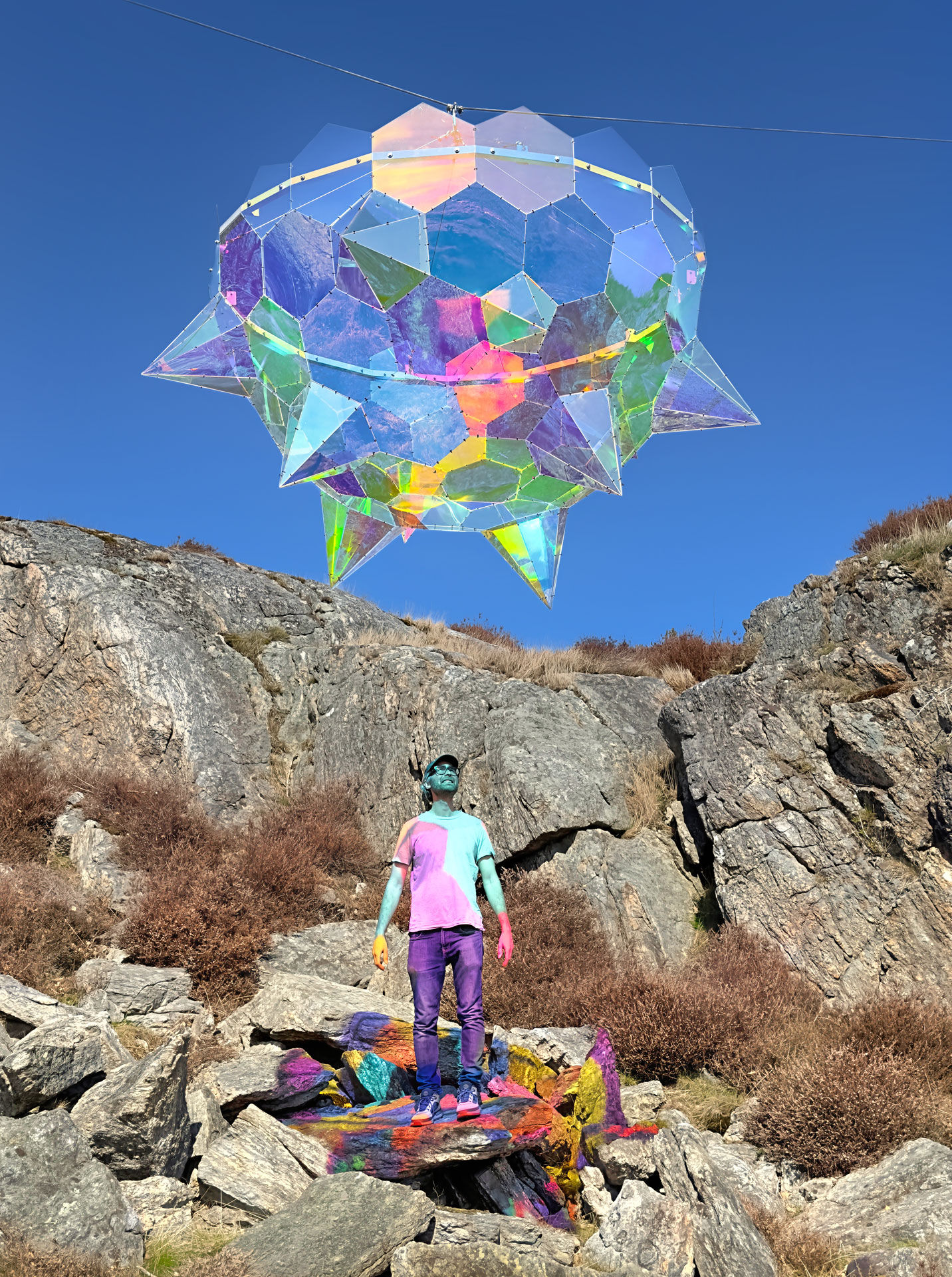
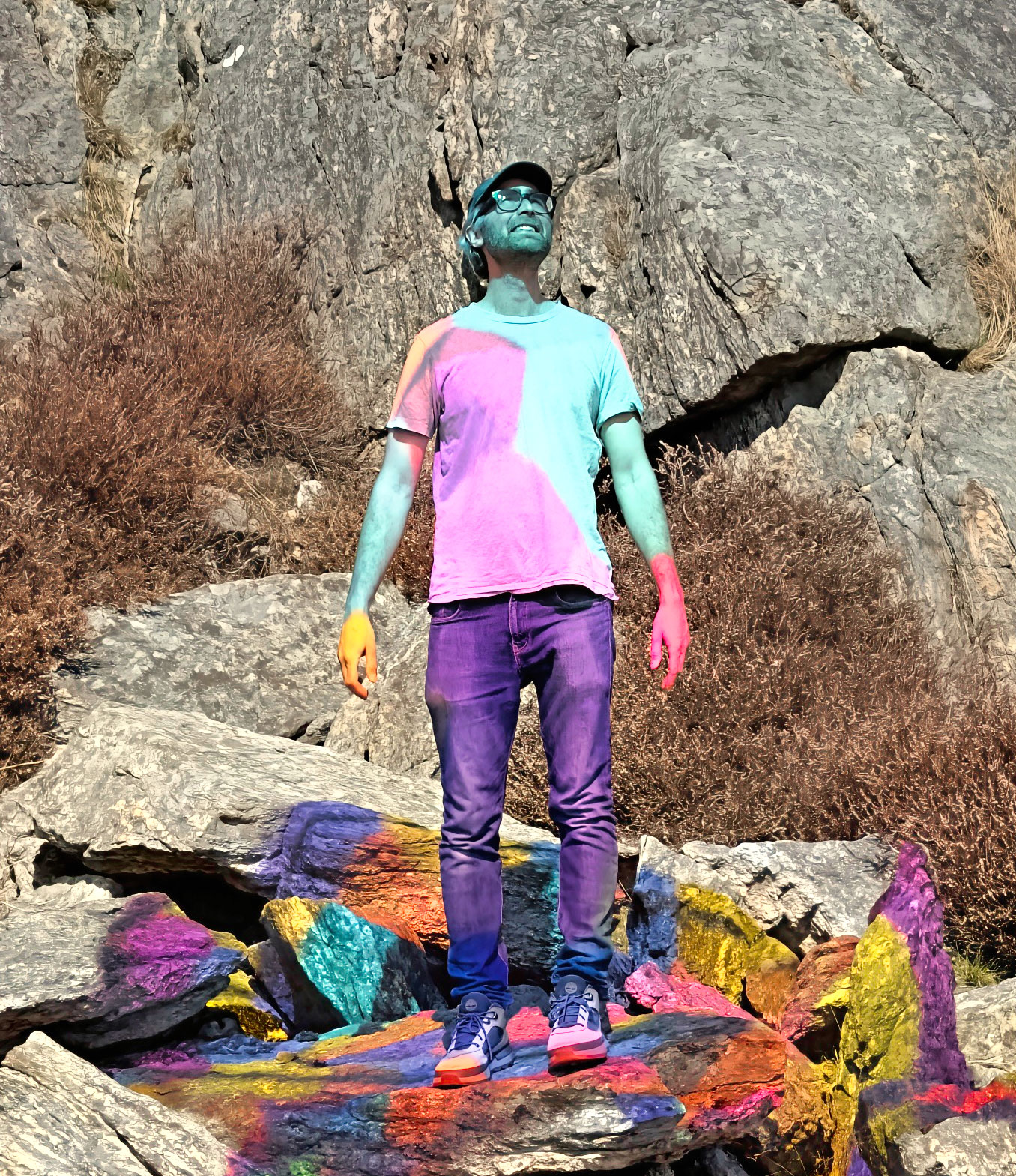
In a blend of humour and seriousness, art reveals how easily the eye is deceived, and how what we think we see is so much else. Meanings are shifted, challenging our habitual seeing. In times of global conflicts and environmental disasters, this work of art is both a piece of glistening eye candy, and an existential reminder of how remarkable our world is, where beauty and danger are sometimes hard to tell apart.
INFINITY
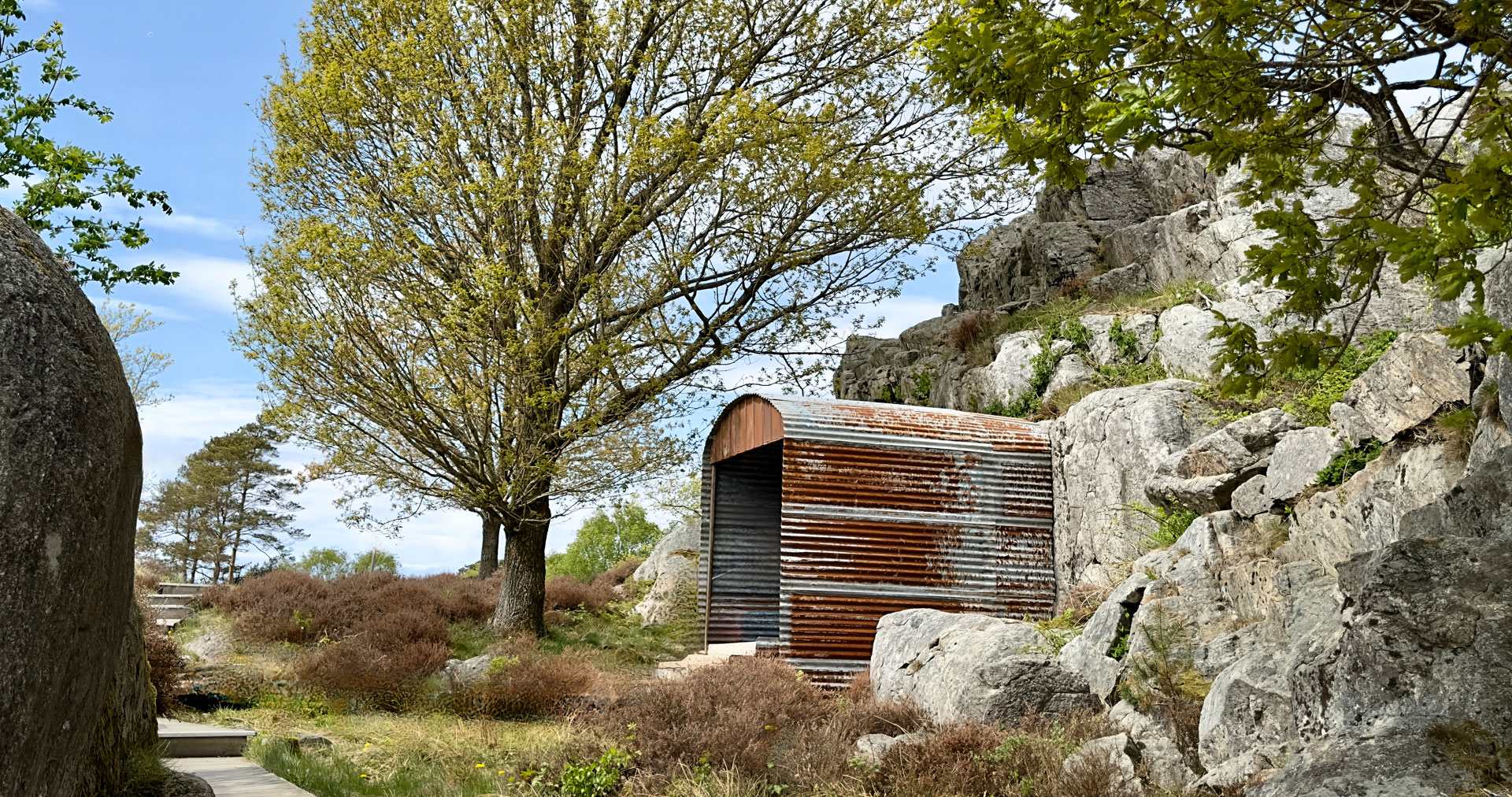
Right next to the enigmatic Morningstar is an entrance to … that’s right! To what? An air raid shelter? A storage cellar? A secret meeting place? If you’ve been to Pilane before, you might be searching your memory. Did I miss it last time? Was that entrance straight into the rock always there? The architectural structure is perfectly integrated with nature. The sheet metal is corroded and looks worn. Above the massive black door, a sign warns us to keep out. But surely it would be okay to peak through the tiny, dark glass panes? Can you resist the temptation? Or do you absolutely want to see what’s behind the door?
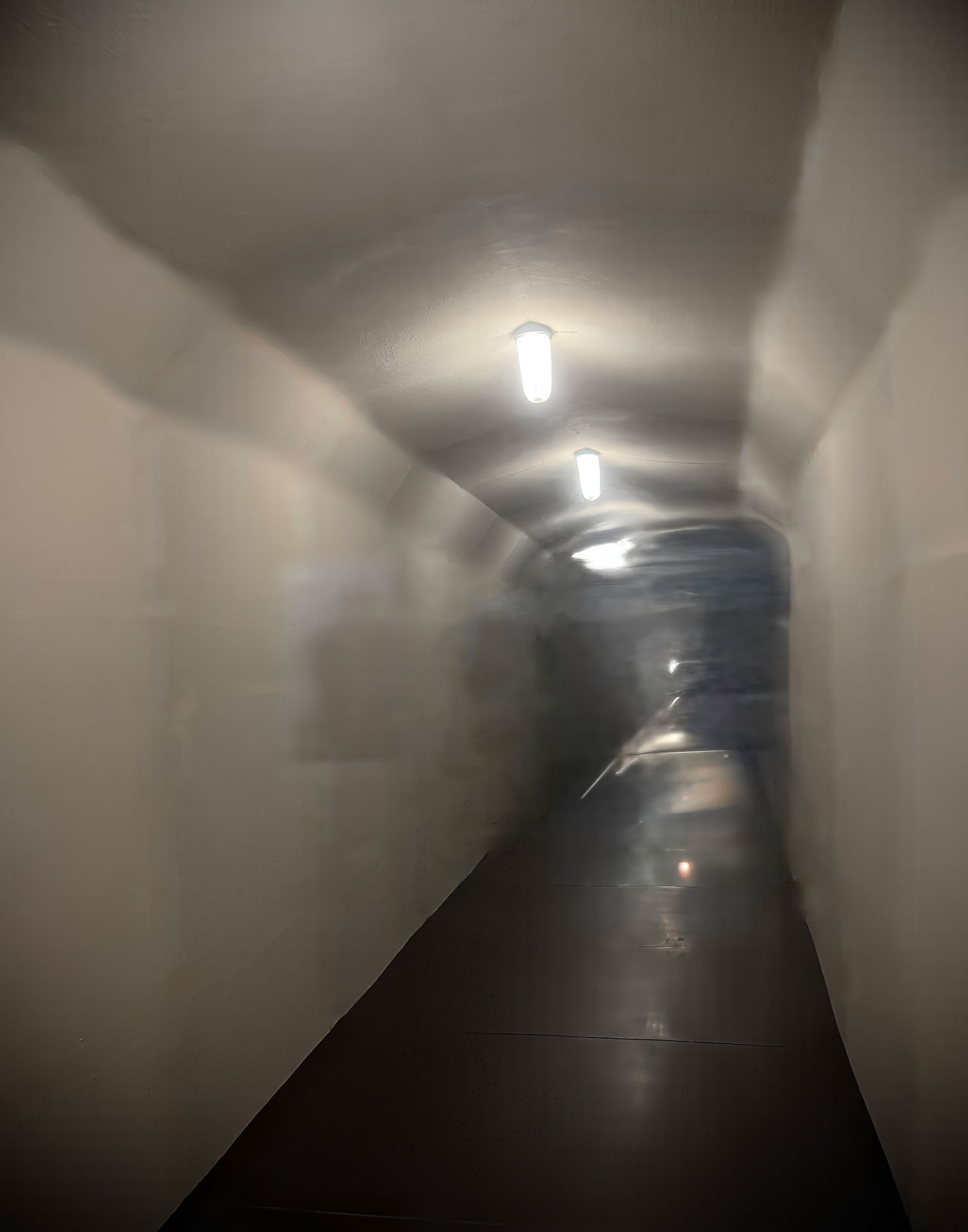
Eric Langert and Per Petersson create art that enacts life itself. Their realistic designs with distinctly surrealist traits appeal to an innate, almost instinctive, curiosity. In this particular case, the work was based on real objects. Clever interventions transform them into unexpected art objects. The most trivial and unnoticed things take on new life and meaning in the natural setting of Pilane. The installation Infinity triggers the imagination, an artistic greeting in a harsh reality.
Eric Langert, born in 1956, studied at the HDK School of Design and Crafts in Gothenburg. He has designed numerous public works, including the Crocodile Tears fountain outside Trelleborg Museum, the playground at Trädgårdsföreningen in Gothenburg, and a concrete, brick and wrought iron wall at Kvilletorget in Gothenburg. Langert is known for his animal figures made of car tyres, metal waste and recycled building material. His series My Animal Park has toured Sweden. Langert is represented in the collections of the Public Art Agency and the Textilmuseet in Borås.
Per Petersson, born in 1962, studied at Stenebyskolan and the HDK School of Design and Crafts in Gothenburg. His works have been shown at Konstepidemin in Gothenburg and Mölndals Konsthall, in addition to several group exhibitions. Petersson has designed numerous public works and is represented in the collections of the Röhsska Museum of Fashion, Design and Decorative Arts in Gothenburg, the Public Art Agency, the Municipality of Stenungsund, and others.