
Berit Lindfeldt
EARTH THORN
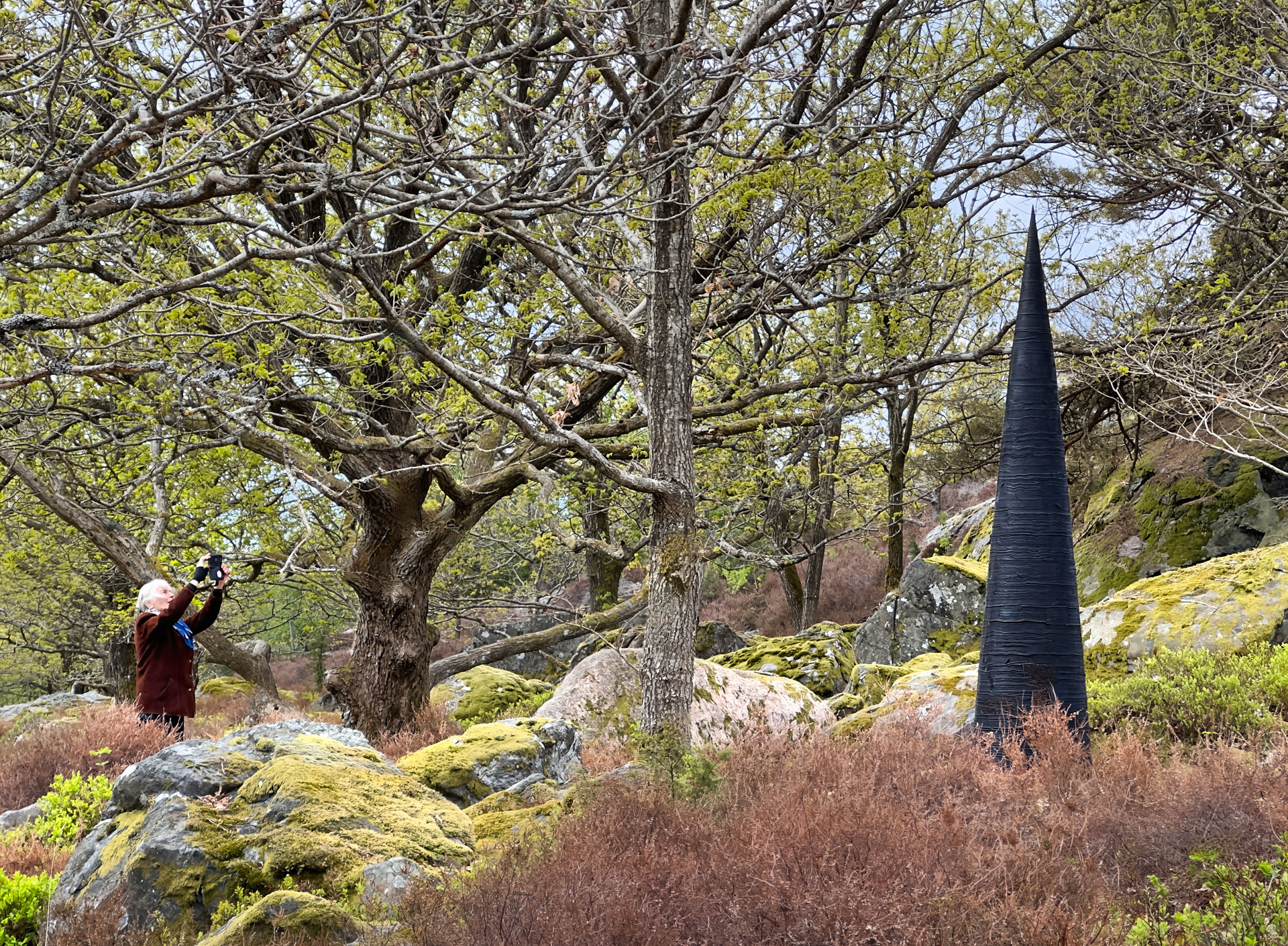
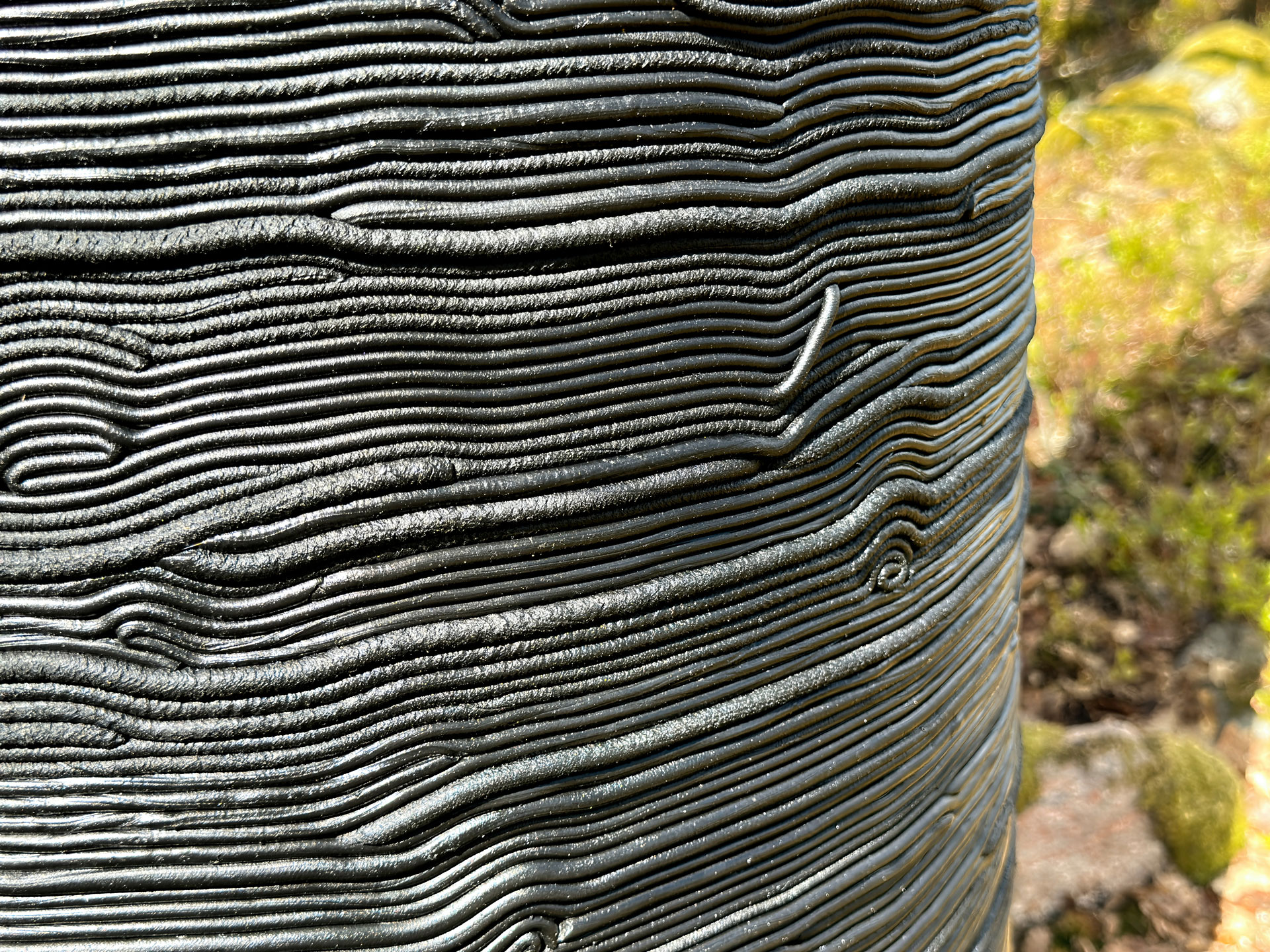
Earth Thorn stands among the boulders in a thicket at Pilane, as though it had sprouted from the memory of the ground. Berit Lindfeldt has wound black rubber thread round and round its conical metal base, like a dark weave of time. The interruptions, flaws and knotted sections are like scars, year rings or signs of lives that have been broken and patched up. Rising with a solemn clarity towards something undefined, the shape is breathtaking in its minimalistic beauty and laden with symbolic meaning.
Lindfeldt’s art marries shape and content in singularly unexpected ways. The artist alternates deftly between large and small formats, between condensed monoliths and composite objects. Concrete, rubber, iron, wood and rope have all been favourite materials. In the mid-90s, she also discovered that artist material can be found anywhere. Things thrown out along the road were waiting to be used in new contexts. Nature’s stock was infinite. She began liberating found objects from their obligation to fulfil their original purpose. With a keen sense, she combined them together into strange new still lifes.
Berit Lindfeldt, born in 1946, studied at Konstindustriskolan in Gothenburg in 1966–71 and the Valand Academy in 1972–77. She has made a large number of public works, including Källa Astrid (2007 at the Astrid Lindgrens Näs arts centre in Vimmerby. She was awarded the Skulpturförbundet Sergel grant in 2014, the Prince Eugen medal in 2015 and the Friends of Moderna Museet Sculpture Prize in 2021.